Learning and Development Opportunities
The Isle of Man Safeguarding Board provides a programme of free learning and development opportunities to support effective safeguarding practice for professionals and volunteers working with children and adults across the Island.
This page brings together:
- An overview of the safeguarding learning and development opportunities available
- A calendar of upcoming sessions
- Further details about each learning opportunity, including who they are designed for and how they are delivered
Our learning offer includes a mix of eLearning, classroom‑based learning, workshops and practice‑focused sessions, all developed and delivered in line with the Safeguarding Children and Safeguarding Adults Competency Frameworks.
Please note that places on classroom‑based learning and workshops are applied for, not guaranteed, and are subject to eligibility criteria, demand and line manager approval.
Learning and Development Calendar
Click HERE to open the current calendar of planned safeguarding learning and development opportunities. Dates are reviewed and updated regularly.
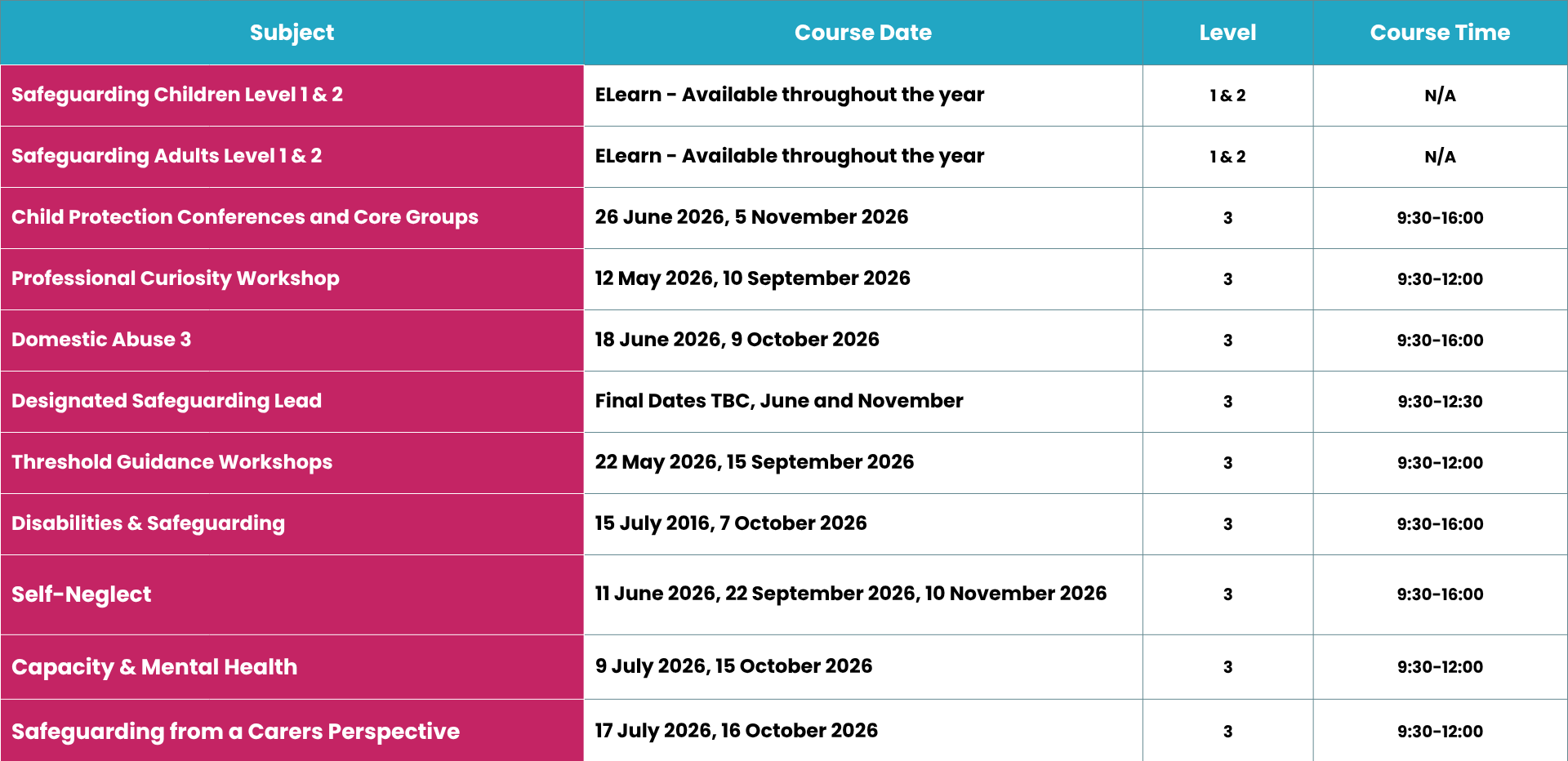
Applicants are encouraged to check this page frequently for the most up‑to‑date information.
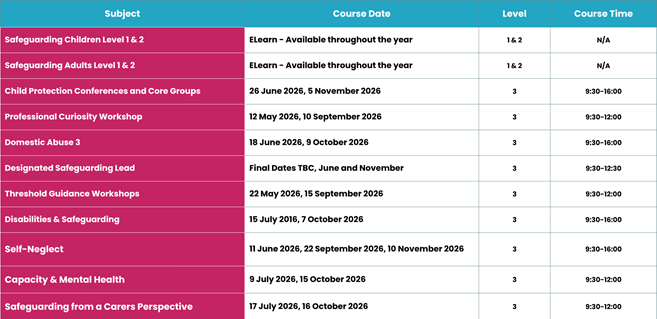
Learning and Development opportunities available
Who is this learning for?
Anyone working or volunteering with children and young people who may identify safeguarding concerns, aligned to the Children’s Competency Framework.
About this learning
This self‑directed eLearning supports understanding of safeguarding responsibilities, recognising concerns and appropriate responses at Level 1 and Level 2.
Format
Online eLearning (available year‑round)
Who is this learning for?
Staff and volunteers working with vulnerable adults who may identify safeguarding concerns, in line with the Adult Safeguarding Competency Framework.
About this learning
Supports awareness, recognition and response to adult safeguarding concerns at Levels 1 and 2.
Format
Online eLearning (available year‑round)
Who is this learning for?
In line with the Children’s Safeguarding Competency Framework, this learning is for Level 3 practitioners.
It is intended for professionals working with children and young people who may contribute to assessing, planning, intervening and evaluating a child or young person’s needs, including parenting capacity where there are safeguarding or child protection concerns, such as Section 46 enquiries.
This includes roles such as Head Teachers and Designated Teachers, GPs, Midwives, Health Visitors, School Nurses, CAMHS professionals, Children and Families Social Workers, Education Liaison Officers, Police (MAPPU), Family Centre staff, Educational Psychologists, Children’s Ward Nurses, and Residential or Secure Care Workers.
If you are unsure whether this level of learning is appropriate for your role, please refer to the Children’s Safeguarding Competency Framework and discuss this with your line manager.
About this learning
A full‑day session led by the Independent Review Team, focusing on effective participation in child protection conferences and core groups.
Who is this learning for?
This learning is intended for professionals working with children and/or vulnerable adults who may contribute to assessing, planning, intervening and evaluating needs where there are safeguarding concerns, including Section 46 enquiries.
This includes roles such as Head Teachers and Designated Teachers, GPs, Midwives, Health Visitors, School Nurses, CAMHS professionals, Children and Families Social Workers, Education Liaison Officers, Police (MAPPU), Family Centre staff, Educational Psychologists, and Residential or Secure Care Workers.
About this workshop
This is a half day session exploring professional curiosity, reflective practice and constructive challenge to improve safeguarding outcomes. This course aims to cover the following points:
- What is professional curiosity?
- Why is professional curiosity so vital?
- Key skills necessary to be professionally curious
- Barriers to professional curiosity
Who delivers the training?
This course will be led by professional and practitioners from both statutory and third sector organisations.
Who is this learning for?
In line with the Children’s and Adults’ Safeguarding Competency Frameworks, this learning is for Level 3 practitioners.
It is suitable for registered health and social care professionals working with adults who assess, plan, intervene and evaluate needs where there are safeguarding concerns, as well as professionals working with children and young people who contribute to safeguarding or child protection processes, including Section 46 enquiries.
This includes roles such as GPs, mental health nurses and social workers, adult and children’s social workers, residential care staff, clinical psychologists and psychiatrists, dentists, Head Teachers and Designated Teachers, Midwives, Health Visitors, School Nurses, CAMHS professionals, Education Liaison Officers, Police (MAPPU), Family Centre staff, Educational Psychologists, and Residential or Secure Care Workers.
About this learning
Examines the impact of domestic abuse, indicators of risk and effective safeguarding responses. This course covers the following aims:
- Understanding domestic abuse and coercive control
- Signs and indicators of domestic abuse
- Impact of domestic abuse on adults and children
- Legislation
- Taking protective steps
Who is leading the Training?
Professionals within education, health & social care with extensive experience within their systems. The training is an interactive half day course. Venue confirmed upon booking.
Who is this training aimed at?
This training is essential for Designated Safeguarding Leads and their Deputies.
What are the course aims?
- To consider the key guidance and legal framework for Safeguarding
- Identify the rationale for having a designated lead for safeguarding
- List and explain the core responsibilities and scope of the safeguarding lead role
- Describe the elements of a positive Safeguarding culture
- Identify supports for managing challenges in the designated safeguarding role
Who is leading the Training?
Professionals within education, health & social care with extensive experience within their systems. The training is an interactive half day course.
Who is this learning for?
This training is essential for any professional or practitioner sharing the principles of the continuum of need and the threshold matrix to support understanding and confidence to inform the right level of support for children and families.
About this workshop
Strengthens understanding and confidence in applying threshold guidance in practice. The course aims are as follows:
- To support the understanding of the threshold matrix and continuum of need using the new format for safeguarding children on the Isle of Man and how this is applied.
- To support practitioners in respect on information sharing and making decisions in respect of threshold.
This workshop is facilitated by
A number of professionals from a multi-agency background with extensive experience working in the field of disabilities both in the UK and the Isle of Man. This is a full day course.
Who is this training aimed at?
Staff working with both children and/or vulnerable adults who have disabilities. This will include learning disabilities, physical disabilities and those with dual diagnosis that includes neurodivergence (note- there will be a separate half-day workshop specifically on neurodivergence)
What are the course aims?
- Increase understanding of disability and vulnerability
- Highlighting the heightened safeguarding issues around disabilities
- Identifying and recognising indicators of abuse, neglect and exploitation
- Strengthening professional curiosity and risk assessment skills
- Improve communication and engagement
- Support multi-agency collaboration
This workshop is facilitated by
A number of professionals from a multi-agency background with experience working in the field of self-neglect. This is a full day course.
Who is this training aimed at?
Professionals and practitioners working with vulnerable adults who may self-neglect.
What are the course aims?
• Exploring self-neglect- principles and values
• ‘Knowing/being/doing”
• Mutli-agency working and the self-neglect pathway
• Supporting professionals and practitioners for self-neglect practise
This workshop is facilitated by
Led by Craig Nugent, a Social Worker and AMHP/ASW with expertise in mental health and capacity.
Who is this training aimed at?
Professionals and practitioners working with vulnerable adults in health and social care.
What are the course aims?
Capacity is an area that impacts on all health and social care matters but can remain a point of confusion among professionals and practitioners. This seminar looks to discuss best practice for capacity concerns, relevant case law, and the potential pitfalls for professionals to be aware of. Followed by Q&A session.
This workshop is facilitated by
Professionals and practitioners from Adult Services and Crossroads.
Who is this training aimed at?
Professionals and practitioners working with carers from all perspectives.
What are the course aims?
- With the aim to raise awareness of the dilemmas and complexities of navigating safeguarding concerns within family settings, developing an understanding of when to intervene, and providing support to professionals to aid decision making. This will be an interactive session for professionals and practitioners.